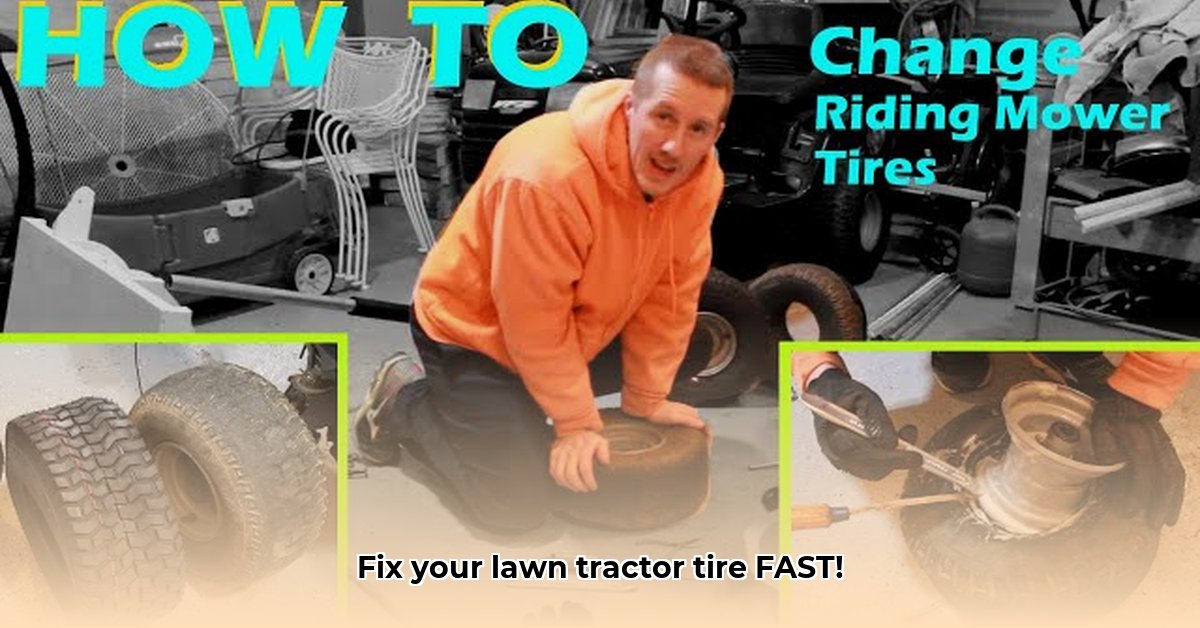
Got a flat, worn, or damaged lawn tractor tire? Replacing it is easier than you think! This step-by-step guide shows you how, using either hand tools or an air compressor. Let's get your mower back in action! For more detailed instructions, see this helpful guide.
What You'll Need
Before starting, gather these essential tools. Many are likely already in your garage.
- Lug Wrench: (Tool for loosening and tightening wheel nuts) Ensure it fits your tractor's lug nuts.
- Jack: (Device for lifting the tractor) Use a jack rated for your tractor's weight.
- Tire Irons (at least two): (Metal levers for removing and installing tires) These are crucial for maneuvering the tire bead.
- Wheel Chocks: (Wedges to prevent the tractor from rolling) Essential for safety.
- Safety Glasses and Gloves: (Protective gear for your eyes and hands) Always prioritize safety!
- Optional: Air Compressor with Tire Chuck: (For faster tire bead removal and installation) An air compressor significantly speeds up the process.
- New Tire: (The replacement tire) Make sure it's the correct size and type for your lawn tractor.
- Penetrating Oil (like PB Blaster): (Lubricant for loosening rusted bolts and nuts) Helpful for stubborn fasteners.
Method 1: Hand-Tool Method
This method uses only hand tools. It's slower but requires no specialized equipment.
Safety First: Chock the wheels securely. Wear safety glasses and gloves. This prevents injury from moving parts or flying debris.
Loosen Lug Nuts: Spray lug nuts with penetrating oil. Wait a few minutes, then use the lug wrench to loosen (but not remove) the lug nuts. Turning them counterclockwise breaks them free.
Jack Up the Tractor: Carefully position the jack under the tractor's frame, near the flat tire. Slowly raise the tractor until the wheel is clear of the ground. Maintain stability to avoid accidents.
Remove the Wheel: Unscrew the lug nuts completely and carefully remove the wheel.
Tire Removal: This is where tire irons shine. Insert an iron under the tire bead (edge of the tire on the rim). Work your way around, prying the bead off the rim. It requires some effort; be patient and persistent. Multiple irons provide leverage.
New Tire Installation: Carefully seat the new tire onto the rim. Use your thumbs to push the bead over the rim. It may require several attempts.
Reinstall the Wheel: Slide the wheel back onto the axle and loosely tighten the lug nuts.
Lower the Jack: Slowly lower the jack, ensuring the tractor remains stable.
Tighten Lug Nuts: Fully tighten the lug nuts using a star pattern (opposite nuts first) for even pressure. Consult your owner's manual for the proper torque specifications.
Final Check: Inflate the tire to the recommended pressure (listed on the sidewall). Inspect for any loose parts or issues.
Method 2: Air Compressor Method
Using an air compressor significantly speeds up the process. Safety remains crucial!
Safety First: Repeat steps 1-3 from the hand-tool method.
Breaking the Bead: With the wheel off the ground, use the air compressor's quick burst of air to separate the tire bead from the rim.
Tire Removal and Installation: Once the bead is broken, the old tire comes off easily. Install the new tire, slightly inflating it with the compressor to help seat the bead.
Steps 7-10 from Hand-Tool Method: Follow these steps to reinstall, lower the jack, tighten nuts, and perform a final check.
Method Comparison
| Method | Pros | Cons |
|---|---|---|
| Hand-Tool Method | No special equipment needed. | More time-consuming and physically demanding. |
| Air Compressor Method | Significantly faster and easier. | Requires an air compressor; can be noisy. |
Remember, always consult your lawn tractor's owner's manual for specific instructions and torque specifications. Now get that flat tire fixed!